Automotive Photo Editing: Why Better Images Sell More Cars
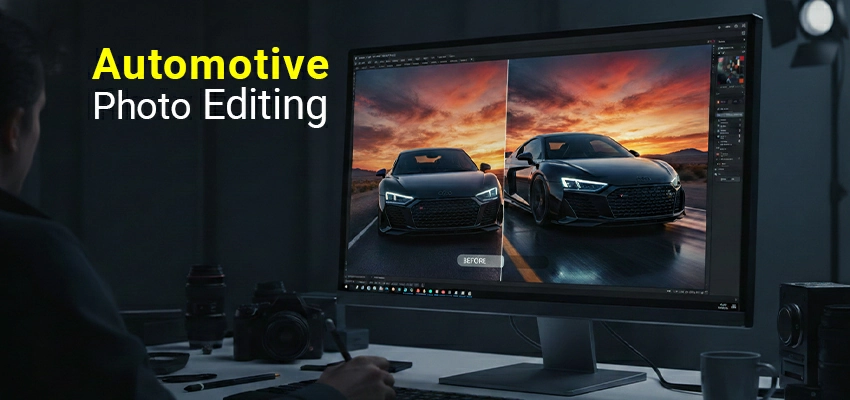
Selling cars online is not just about price, mileage, or specifications anymore. It is about presentation.
A buyer often cares about condition, engine performance, service history, and ownership cost. That’s true. But first, they check the photos. Usually, they decide if a listing is worth their time in just a few seconds.
That is where automotive photo editing matters.
When done right, it doesn’t make a bad car seem dishonest. Instead, it makes a real car look clear, clean, and trustworthy. It helps dealers, marketplaces, resellers, and photographers show vehicles as buyers want to see them online. This often leads to more clicks, better inquiries, and faster sales.
Sellers often waste money on inventory and ads due to poor product images. Automotive photo editing is important because it helps cars sell faster online.
What Is Automotive Photo Editing?
Automotive photo editing makes vehicle images look better for online listings, dealership sites, and ads. It also enhances photos for use on marketplaces and in promotions.
At a basic level, this includes:
- Brightness correction
- White balance adjustment
- Cropping
- Straightening
It includes reflection control, paint and shadow refinement, and detailed editing of interiors, exteriors, and backgrounds. That last part is important.
Most sellers do not upload one image. They upload 10, 20, or sometimes 40 images of the same vehicle. If those images look inconsistent, the listing feels sloppy. If they look polished and uniform, the listing feels credible.
That is the real job of automotive photo editing. It is not only to make one image look better. It is to create a presentation that makes the vehicle feel more desirable and easier to trust.
Why Automotive Photo Editing Matters for Online Car Sales
Online car buyers cannot touch the vehicle. They cannot walk around it. They cannot inspect the finish under natural light. Furthermore, they cannot sit in the cabin unless they visit in person.
So your photos do that job for you.
If the images are weak, the buyer assumes the rest may be weak too.
This happens fast. A photo with poor exposure, a distracting lot of background, dirty pavement, or blown-out highlights does more than look bad. It creates doubt. Buyers start wondering what else is being overlooked.
Professional editing helps solve that.
It improves first impressions. It increases listing appeal. Also, it makes the vehicle easier to compare. Furthermore, it gives the impression that the seller is organized and serious. And when you are selling in a competitive market, that edge matters.
Better presentation also supports stronger paid advertising performance. A polished vehicle photo is more likely to earn attention in search ads, display creative, social posts, and marketplace thumbnails.
You do not need movie-level retouching. You need photos that look accurate, clean, bright, and consistent.
That is what moves inventory.
How Edited Car Images Influence Buyer Psychology
People like to believe they buy logically. Most do not. They justify logically after reacting visually.
That is especially true with vehicles.
A clean, sharp image makes a car feel newer, even when the model year is not new. A balanced photo makes paintwork feel richer. Consistent angles across a listing make the dealership look more professional. A crisp interior photo makes the cabin feel better maintained.
None of this changes the vehicle itself. But it absolutely changes how the buyer experiences the listing.
Edited images also reduce friction. They answer unspoken questions before the buyer asks them. Is the seller serious? Is the car well presented? Can I trust this listing? Does this dealership care about detail?
Strong automotive photo editing supports the answer buyers want: yes.
That is why better photos can reduce price sensitivity too. When two similar vehicles compete online, the one with better presentation often earns the click first. That vehicle gets the first inquiry, the first test-drive request, and often the first serious conversation.
That is not theory. It is how digital buying works across every category.
Cars are no different.
The Biggest Problems in Raw Car Photos
Raw vehicle photos usually have the same predictable issues.
The first is reflections. Cars are reflective by nature. Windows, chrome, glossy body panels, and headlights all catch unwanted light, nearby objects, and busy surroundings. You may end up with trees, buildings, poles, clouds, or the photographer reflected across the vehicle surface.
The second is inconsistent lighting. Outdoor dealership photos are often taken at different times of day, in changing weather, or under mixed lighting conditions. That leads to dull paint in one image, overexposed highlights in another, and muddy shadows in a third.
The third is distracting background clutter. Other cars, signage, trash bins, cracked pavement, service bays, and random street elements all pull attention away from the vehicle.
Then there are smaller but still damaging issues: tilted angles, weak composition, dirty glass, flat-looking tires, lost detail in rims, color casts, and inconsistent crops.
Individually, these problems may seem minor. Together, they make the car look less appealing.
That is why editing matters. It removes distractions and restores focus to the one thing the buyer came to see: the vehicle.
Core Automotive Photo Editing Services That Help Cars Sell Faster
Not every listing needs heavy retouching. But almost every listing benefits from professional improvement.
Background Cleanup or Replacement
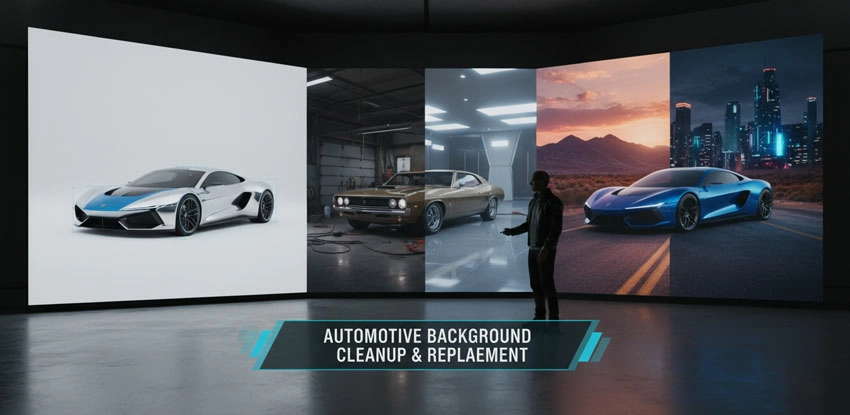
A messy background hurts vehicle presentation. A clean, neutral, consistent background helps the car stand out. For dealerships, this is one of the fastest ways to make inventory look more organized across the website or marketplace feed.
Reflection Control
This is one of the hardest parts of automotive editing. Car surfaces reflect everything. Good editors reduce distracting reflections without making the vehicle look fake or plastic.
Paint and Body Enhancement
Cars should look polished, not exaggerated. Smart editing helps bring out paint depth, body lines, and contours while keeping the result realistic.
Shadow Correction
Bad shadows make cutouts look cheap. Good shadows add realism and help ground the vehicle naturally in the frame.
Glass Cleanup
Windows and windshields often show glare, smears, dust, or interior darkness. Editing helps improve clarity while keeping the image believable.
Tire and Rim Enhancement
Wheels matter more than many sellers realize. Clean tires and well-defined rims make the car feel better maintained and more premium.
Color Correction
Paint color must look accurate. If a black car looks blue or a silver car looks yellow, you are creating confusion. Buyers notice.
Plate Blur or Replacement
For privacy, compliance, or branding reasons, sellers may need number plates blurred, masked, or standardized.
Interior Enhancement
Cabin images are often darker and harder to shoot than exterior views. Editing can lift detail in seats, dash, console, trim, and infotainment areas without flattening the image.
Headlight, Taillight, and Chrome Detailing
These details add polish. When they look sharp and clean, the vehicle feels more premium.
Perspective Correction and Straightening
A slightly tilted car photo looks amateur. Straightening and perspective correction instantly improve professionalism.
Batch Consistency
This is the hidden value. When all listing images follow the same color balance, crop logic, shadow style, and visual standard, buyers trust the presentation more.
Automotive Photo Editing for Different Types of Sellers
Different sellers use vehicle photo editing differently.
Dealerships need consistency at scale. They may upload hundreds of vehicles every month. Their problem is not only quality. It is repeatable. They need every listing to look like it belongs to the same brand.
Used car resellers often need editing because their source images are less controlled. They may be working with smaller lots, inconsistent lighting, or on-the-go photography. Good editing helps them compete with larger dealers.
Automotive photographers need editing support when shooting volume. They may be excellent behind the camera, but post-production is still time-consuming. Outsourcing editing lets them scale.
Marketplaces need image quality standards because inconsistent listings reduce overall platform quality. Cleaner listings usually create better user experience.
Luxury and exotic vehicle sellers face an even higher bar. Premium cars demand premium presentation. A high-end vehicle with weak editing looks careless. Buyers in that segment expect better.
Which Car Photos Need Editing the Most?
Not all photos have equal selling power.
The most important image is usually the front three-quarter hero shot. This is the image buyers often see first in search results, category pages, and marketplace thumbnails. If that one fails, the rest may never get viewed.
The side profile matters because it helps communicate shape, proportion, and condition.
The rear three-quarter shot adds completeness and gives buyers confidence that the listing is not hiding anything.
Interior shots matter more than many sellers assume. Dashboard, steering wheel, infotainment screen, center console, seats, and trunk space all support buying decisions. Buyers want to imagine themselves in the car.
Wheel closeups also matter. Clean wheels make the vehicle feel cared for. Dirty or underexposed wheel shots make the opposite impression.
Even damage disclosure images can benefit from editing. Not by hiding anything, but by improving clarity so the buyer understands the issue properly.
That is a key distinction. Good automotive photo editing improves presentation. It should not misrepresent the condition.
Automotive Photo Editing vs Raw Photos: What Changes the Most?
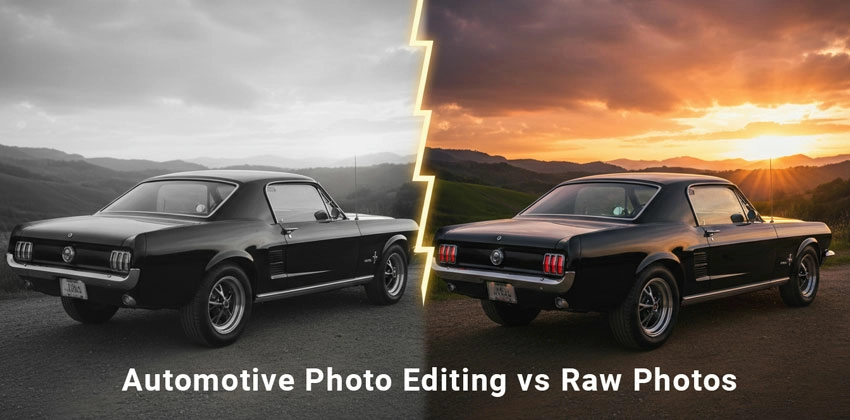
The most obvious change is visual appeal. Edited photos look cleaner, brighter, and more professional.
But that is only the surface-level benefit. The deeper change is performance.
Edited images usually improve click potential because they look better in crowded search results and listings. They improve trust because the seller appears more organized. They improve consistency because buyers can compare images more easily. Also, they improve perceived value because the vehicle looks properly presented.
And they help reduce wasted traffic. When photos are clearer and more accurate, buyers who inquire are more likely to understand what they are interested in.
That means better leads, not just more leads.
Raw photos may feel more “honest” to some sellers, but that is usually the wrong way to think about it. Raw does not automatically mean authentic. Often it just means careless. A muddy image is not more truthful than a clean one. It is simply worse communication.
Manual Editing vs AI Automotive Photo Editing
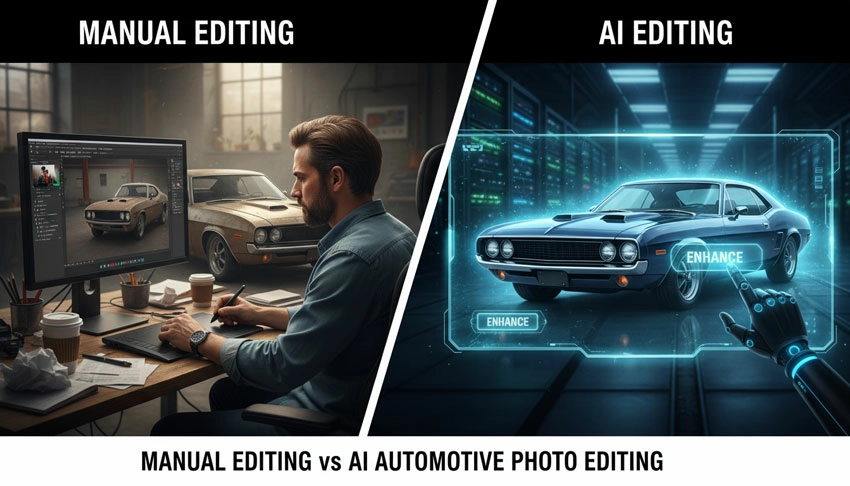
AI has changed photo editing fast.
It can speed up background removal, automate cropping, normalize exposure, and help process high-volume image sets quickly. That makes it useful, especially for first-pass edits.
But automotive images are tricky.
Cars have reflective surfaces, fine body lines, transparent glass, metallic finishes, chrome details, and shadow complexity. These are exactly the areas where AI often struggles.
It may cut edges poorly, create unnatural reflections, oversimplify shadows, and shift paint tones. It may also make wheels or windows look artificial.
That is why human review still matters. The best approach today is usually hybrid.
Let AI handle repeatable base corrections where appropriate. Then let experienced human editors refine the hard parts and check quality before delivery.
That gets you speed without sacrificing trust.
For automotive listings, that balance matters. A car that looks “AI-edited” in the bad sense can lose credibility quickly. Buyers may not know the technical reason, but they can tell when something looks off.
The Ideal Workflow for High-Volume Vehicle Listing Images
If you are handling automotive inventory at scale, random editing is not enough. You need a repeatable workflow.
It starts at the shoot. Consistent angles, lens choices, backgrounds, and timing reduce editing problems later.
Then comes file organization. Images should be grouped logically by vehicle and view type.
The first editing pass should handle the basics: exposure, color, crop, straightening, and cleanup.
The second pass should focus on vehicle-specific refinement: reflections, paint detail, glass, rims, shadows, and interior enhancement.
Then comes quality control. This step is critical. A few bad images can damage confidence across the whole listing.
Finally, images should be exported in the correct formats for dealership sites, classified platforms, paid ads, and social distribution.
The point is simple. Fast editing helps. Structured editing helps more.
Mistakes to Avoid in Automotive Photo Editing
The biggest mistake is over-editing.
A car should not look like a video game render. If the paint looks fake, the reflections are unnatural, or the shadow does not match the lighting, buyers notice. It feels deceptive.
Another common mistake is hiding real condition issues. That crosses the line from presentation into misrepresentation. If the vehicle has a visible defect that matters to a buyer, editing should not erase it.
Inconsistent background treatment is another problem. If one image has a studio-like white background, the next has a parking lot, and the next has a rough cutout, the listing feels stitched together.
Too much saturation is also common. Sellers want the car to pop, so they push color too far. The result usually looks cheap.
Weak cropping is another silent killer. If important parts of the vehicle are clipped or framed awkwardly, the whole listing feels less professional.
Good editing should feel invisible. The buyer should think, “That looks like a good car,” not, “That photo looks heavily edited.”
ROI: Can Better Car Photo Editing Actually Help You Sell Faster?
Yes, but not because editing is magic. It works because presentation affects behavior.
Better photos attract more attention, creates more clicks and create stronger inquiries. Stronger inquiries improve the chance of faster sales.
That does not mean editing fixes bad pricing, poor inventory, or weak sales operations. It does not.
But it does improve the part of the funnel where most listings first win or lose: the visual decision point.
Think of it this way. You are already paying for inventory, staff, listings, ad spend, and website infrastructure. Why let poor images reduce the return on all of that?
Automotive photo editing is not the whole sales strategy. It is the multiplier.
And in crowded online markets, multipliers matter.
Quick Checklist Before Uploading Car Photos Online
Before publishing a vehicle listing, ask these questions:
- Is the main hero image sharp and well-lit?
- Does the car look straight and properly framed?
- Are reflections controlled? Is the background clean and not distracting?
- Does the paint color look accurate?
- Are windows, wheels, and trim clear?
- Do interior shots show useful detail?
- Do all images look consistent as a set?
- Does the listing feel professional at a glance?
- Does the car look better without looking fake?
If the answer is no to several of these, editing is not optional. It is necessary.
Frequently Asked Questions
What is automotive photo editing?
It is the professional enhancement of car images for listings, dealership websites, ads, and marketplaces. It includes cleanup, color correction, reflection control, shadow refinement, and consistency improvements.
Does automotive photo editing really help cars sell faster online?
It can. Better photos improve click appeal, trust, perceived value, and listing quality. Those factors help attract stronger buyer attention earlier.
What is included in vehicle photo retouching?
Common tasks include background cleanup, paint enhancement, glass correction, wheel detailing, exposure balancing, interior improvement, cropping, straightening, and batch consistency.
Can automotive photo editing remove reflections from car surfaces?
Yes, to a point. Skilled editors can reduce distracting reflections while keeping the vehicle realistic.
Is AI enough for automotive photo editing?
Not always. AI helps with speed, but car images often need human correction for reflections, body lines, shadows, and color accuracy.
How many car photos should be edited per listing?
Every public-facing image should meet the same quality standard. If one image looks weak, it can lower trust in the whole listing.
What is the best background for online car listings?
A clean, consistent, distraction-free background usually performs best because it keeps attention on the vehicle.
Can interior vehicle photos be edited too?
Yes. Interior photos often need exposure balancing, detail recovery, color correction, and cleanup.
Final Thoughts
Automotive photo editing is no longer a nice extra. It is part of selling.
Online buyers judge vehicles visually before they compare them logically. If your images look weak, your listing starts with a disadvantage. If your images look clean, accurate, and consistent, your vehicle earns a better chance of being clicked, trusted, and contacted.
That is the real point. You do not need flashy edits. You need disciplined, realistic, sales-focused presentation.
And if your business depends on moving vehicle inventory online, that is not a small upgrade. It is a competitive advantage.