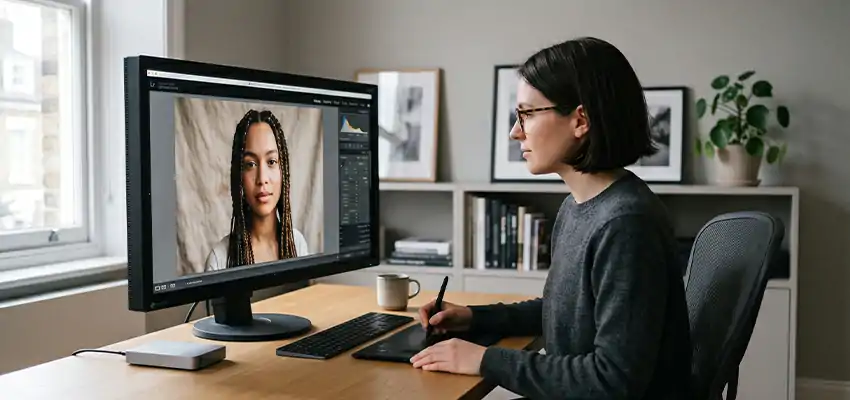
Digital Photo Editing Processes For Business

So what is photo editing, really? Simple version: you take an image and change it somehow, usually because it needs fixing or it’s not quite right for what you want to use it for. Digital photo editing just means you’re doing that on a computer instead of in a darkroom with chemicals, which is how it used to work.
Cameras and scanners aren’t perfect. They never have been. You snap a photo and something’s off, maybe the lighting’s bad, the colors look weird, there’s a weird shadow across someone’s face, whatever. Designers fix this stuff using software, Photoshop being the obvious one everyone reaches for first.
Why should we take digital photo editing service?
Here’s the honest truth about photography: nobody gets it perfect in camera every time. Not even professionals. The light’s never quite right, the angle’s a bit off, something in the background shouldn’t be there. For personal photos that’s annoying. For a business, it’s a real problem, because people decide whether to buy something in about two seconds based on how it looks in a photo. If it looks cheap or off, they scroll past.

There’s also the restoration side of things, which honestly doesn’t get talked about enough. Old family photos crack, fade, get water damage sitting in a box for thirty years. Editing can bring those back. Sounds small until it’s your grandmother’s photo and someone in it has passed away. That’s not really a “business” use case but it matters to people, so it’s worth mentioning.
What are the types of digital photo editing service?

We’ll go through the main ones, because they’re not all the same job and people mix them up a lot.
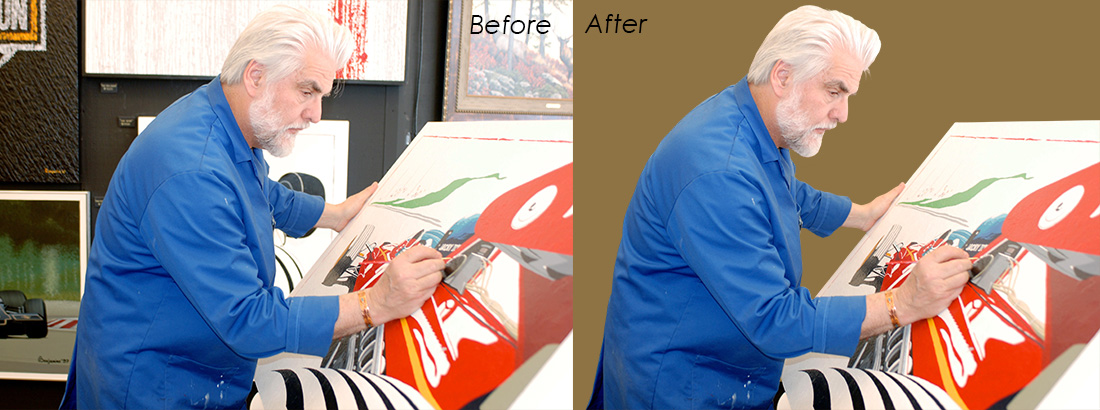
Clipping path is basically cutting something out of its background. The designer traces around the object with Photoshop’s pen tool, very precisely, so they can swap backgrounds or isolate just that part of the image. Most product photos on white backgrounds have been through this process.

Color correction fixes images where the colors came out wrong, too warm, too flat, whatever happened with the camera settings or lighting that day. This one actually matters a lot for online selling. If a shirt photographs as navy blue but it’s really more of a teal, you’re going to get returns and annoyed customers.

Image restoration is the old-photo repair work we mentioned. Cracks, fading, missing pieces, water stains. Skilled restoration work is honestly closer to detective work than editing sometimes, because the designer has to figure out what was probably there originally.

Retouching shows up constantly in product and fashion shoots. Photographers use clips, stands, tape, mannequin hands, anything to hold a product in place while shooting, and all of that has to get edited out after. This also covers the usual stuff like smoothing skin, removing blemishes, fixing flyaway hairs. Done well it looks natural. Done badly it looks plastic, which is a complaint people have about a lot of fashion photography honestly.
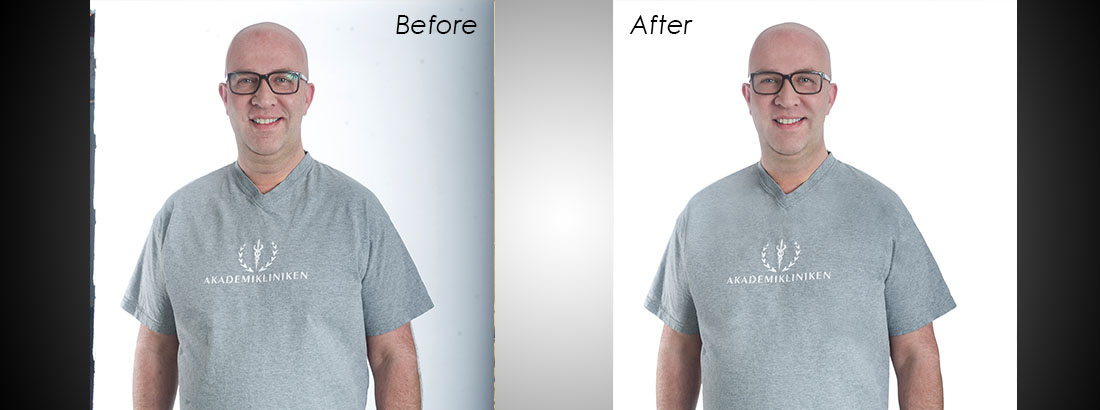
Masking is for the tricky cases clipping path can’t handle, hair, fur, see-through fabric, anything without a clean hard edge. Instead of tracing a line, designers work pixel by pixel with layer masks. Slower, more detailed work. A lot of professionals use a pen tablet for this because a mouse just isn’t precise enough.
Raster to vector conversion turns a pixel-based image into one built from mathematical paths, meaning you can blow it up to billboard size and it still looks sharp. Logos almost always exist in vector form for exactly this reason. Illustrator is the standard tool here.

Creative manipulation is more build-from-scratch work, combining images, putting together a banner or catalog layout, that kind of thing. Less “fix this photo” and more “make something new.”

Shadow work sounds minor but it changes everything about how a product photo reads. No shadow, and the product looks like it’s floating, weirdly, even if you can’t say why it looks off. Add a realistic drop shadow or reflection and suddenly it feels grounded and real. Real estate and furniture photos lean on this a lot.

What people actually use to do this
Photoshop is still the default for most of this, retouching, color work, masking, you name it. Illustrator handles the vector side. Lightroom gets used a ton for batch editing, which matters if you’re an online store processing hundreds or thousands of product shots a month and need them to all look consistent.
Outside Adobe, GIMP is the free option people fall back on. Affinity Photo has picked up a real following too, mostly because it’s a one-time purchase instead of a subscription, which a lot of freelancers appreciate. And AI tools have crept into this space more and more lately, automatic background removal, AI upscaling, that sort of thing speeds up the boring repetitive parts. Doesn’t replace a skilled editor for the hard stuff, but it saves time on the easy stuff.
Who’s actually paying for this work
Short answer: anyone selling something people look at before buying.
Big brands need their product images consistent across websites, catalogs, packaging, ads, and all of that takes editing to pull off properly. A raw camera file alone doesn’t get you there.
E-commerce is probably the biggest chunk of this industry at this point. Online stores live or die on how good their product photos look, since nobody can pick the item up and check it in person first. A mid-sized store might be running through thousands of images a month just to keep listings looking sharp and uniform.
Photographers rely on this too, more than people realize. Nobody captures a flawless shot every single time, so editing has basically become part of the photography process, not some extra add-on.
Fashion and modeling work leans hard on retouching for that polished look, while magazines and online publishers need images properly sized and sharpened for both print and web.
Importance of digital photo editing services
Digital Photo editing service is important for every sector where the business is too much connected with the images. In fact, in this era every business more or less demands the usage of attractive images for various purposes. Let’s see which businesses need the image editing services most.

The multinational companies run their business worldwide. They have to branding for the company, accelerate the product promotion, make familiar their products with the general people etc. and to fulfill the objectives, they need high quality images for using different media like print media, digital media or something like this.
But for getting a high quality photo, only capturing by the quality full camera is not enough. That is why, digital photo editing is must for them. Moreover, they use product catalogs, brochures, leaflets, banner, festoon etc. which are created by the graphic designers.
Around the world, there are thousands of eCommerce businesses who are using millions of high quality product images every year. They have to use high quality and engaging product images to catch the effective customers for selling more. Only raw images cannot attract the traffic due to various defects and to make the images removing the flaws, the business owners use digital photo editing services.
The photographers use various digital image editing services for making their images stand out of others. They cannot capture 100% flawless image due to unavoidable reasons. And that is why they take their images to the graphic experts who edit as the images deserve.
The models and the fashion personnel ask for image editing services to make their images glamorous and more beautiful. Most of the time, they represent many products. They have to attend many events and they are captured with the products by the photographers for making ads, banner, festoon, billboard etc.
Without editing the images cannot be used anywhere because of their various defects related to lighting problems, alignment, undesirable backgrounds and objects etc. Various magazines, newspapers, journals, digital portals etc. need high quality images and for these, they need to take editing services.
Picking someone to do the work
If you’re hiring out this kind of work, a few things are worth checking first: how fast is their turnaround, do they have sample work in your actual niche (product shots are nothing like real estate editing, which is nothing like portrait retouching), what’s their revision policy, and can they handle it if your volume jumps suddenly.
Most established editing companies do bulk pricing for e-commerce clients and can rush jobs when needed, so it’s worth just asking upfront rather than assuming.
At this point photo editing isn’t really optional for most businesses. If you’re selling anything visually, and almost everyone is these days, people are judging your product off a screen before they ever touch it. The editing is what makes that first impression actually work in your favor.