A Guide to Hotel Room Photo Retouching
Most people get why a house needs nice photos before it’s listed. That’s normal now. But hotel rooms? People don’t think about it the same way. Which is strange, because it should matter just as much. Maybe more.
Think about it. A guest never sees the room before they book it. All they have is a photo on a screen. If that photo looks dark, boring, or messy, they scroll past it. Simple as that. So the photo isn’t just decoration. It’s doing the actual selling.
Right now there are hotels opening up everywhere. Small ones, big chains, boutique places, budget rooms. All of them want the same thing: guests. And guests almost always book online first. So if your photos look worse than the hotel next door, you lose that guest before you ever meet them. That’s just how it works now.
This is why photo editing for hotel rooms isn’t some extra step anymore. It’s basic. If you skip it, you’re already behind.
First, You Have to Shoot the Room Right
Here’s the thing people forget. Editing can’t fix everything. If the photo was shot badly, no amount of retouching saves it. So the shoot matters a lot, maybe more than people realize.

If you’re the photographer, doesn’t matter if it’s your first hotel job or your hundredth, a few things really matter. Have you shot bedrooms before? Regular homes, apartments, that kind of thing? That experience helps. Hotel rooms have a lot of the same problems. Weird corners. Furniture that doesn’t line up right. Light that hits in strange places.
Lighting is probably the hardest part. Hotel rooms almost never have perfect light. You’ve got window light mixing with lamp light mixing with ceiling lights. And shadows show up where you don’t want them.
Getting all that to look balanced and warm, instead of flat or too yellow, takes practice. Even people who’ve done this a hundred times still mess it up sometimes.

Beyond lighting, think about what the guest needs to feel. They need to picture themselves there. So the bed should look clean. The bathroom should look fresh, not cramped. The angle matters too, because a bad angle can make a big room look small.
Every little thing in the shot, the bed, the curtains, the small stuff nobody notices consciously, all of it adds up to a feeling. Either “I want to stay here” or “next.”
Bathrooms are the worst to shoot, honestly. Small space. Mirrors reflecting things you didn’t want in the shot. Tile bouncing light everywhere. It takes patience to make a tiny bathroom look like somewhere nice.

Let’s Jump to Image Retouching
Even a good shoot needs fixing afterward. That’s not a failure. It’s just how it goes. Nobody gets a perfect shot every single time. This is where editing comes in.
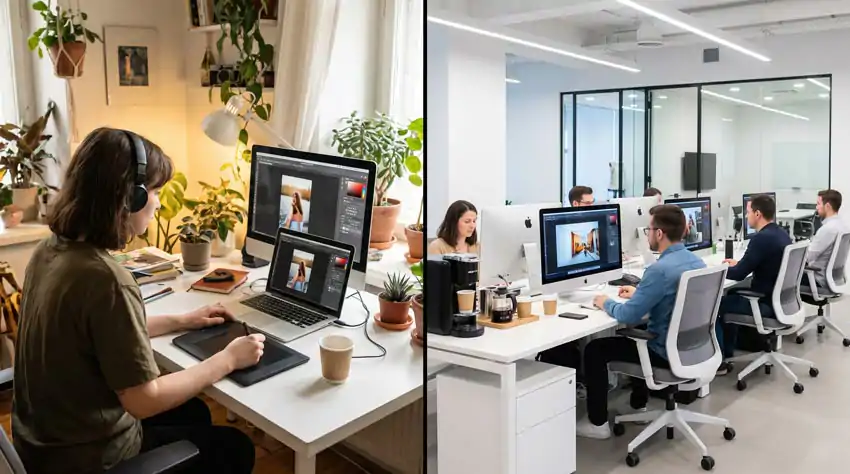
Some photographers edit their own photos. Some send them to a retoucher who does this full time. Some hotel owners skip the photographer for this part and just hire an editor directly once they’ve got the raw photos. All three ways work fine. It just depends on time, money, and how much control you want.
Object Removal
First and foremost thing required to upgrade hotel room images is the pre-visualization knack. The retoucher should think in advance what can be the likely flaws in the images and how to fix them. The flaws embody inappropriate background, lack of clarity due to lighting and color issues, sloppy room materials, unwanted objects, etc.

Wrinkles Removal
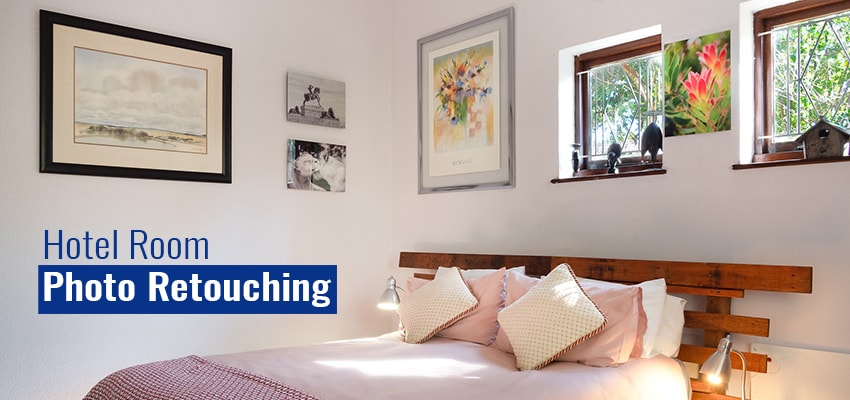
Secondly, you have to urge some of the integral and peripheral materials such as bed, carpet, furniture, upholstery, curtain, wall, etc. in the images. A bed may contain wrinkles and reflect harsh shadow which are unflattering. Carpet may contain stains in one part or sporadically. Likewise, upholstery and curtain may also contain blemishes or they may be wrinkled here and there. The wall in the room may not be sparkling as it should be. Employing image retouching techniques, you can fix and optimize the images.

Exposure Correction
Thirdly, you have to take cognizance of the color and contrast of hotel room images. The images can have a color cast which can impact the splendor of the images. You as an image enhancer, have to tone down the color cast to notch up a perfect color balance. The bottom line is that you have to tweak and adjust the color as well as contrast based on the requirements of the clients. Another point to focus on is the perspective of the room as the wrong perspective can totally wreck the appeal of the images.

So Why Does Any of This Matter
Simple. Guests pick hotels based on what they see online before they ever step foot inside. If the photos look dull or messy, they hesitate. And hesitation usually means they book somewhere else instead.
With so many hotels fighting for the same travelers, that small hesitation matters a lot. It can be the difference between a full hotel and an empty one.
Getting this right takes two things working together. A good shoot. And good editing after. One without the other doesn’t really work. A great shoot with lazy editing looks unfinished. Great editing on a badly shot photo can only fix so much.
There’s no real shortcut here. Small inns, big hotel chains, doesn’t matter. The places that put a little extra care into their photos are usually the ones filling rooms faster. It’s a small thing in the grand scheme of running a hotel. But it quietly does a lot of the work.