Freelancer vs Photo Editing Company: Which Should You Choose?
You have a backlog of photos to edit. This might include 500 product shots for your online store. It could also involve a wedding gallery that’s due in two weeks or real estate images that need sky replacements and HDR blending.
The question remains the same: do you hire a freelancer or choose a professional photo editing company?
Both options can be effective. However, choosing the wrong one can cost you time and money, and it can frustrate clients. This guide outlines what each option offers, where they may fall short, and how to find the one that fits your needs.
What’s the Real Difference Between the Two?
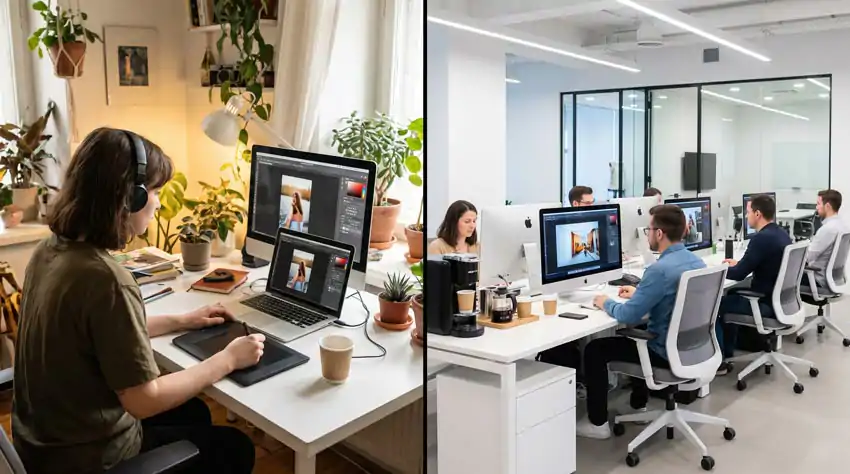
A freelancer is one person. They take your images, edit them based on your instructions, and send them back. Simple.
A photo editing company is a team. You deal with one account manager or intake system, but multiple editors might work on your files. They have quality control processes, defined turnaround times, and the ability to handle volume without breaking down.
That difference sounds small on paper. In practice, it changes almost everything about how the relationship works.
The Case for Hiring a Freelancer
Cost Is Usually Lower
Freelancers often charge less than editing companies, typically $20 to $100 per hour based on experience and project complexity. For occasional, low-volume editing, a freelancer is usually the most cost-effective choice.
You Can Build a Real Working Relationship
Finding a freelancer you connect with makes communication easy and personal. They learn your preferences, so you don’t have to explain your editing style repeatedly. This familiarity is hard to achieve with a company, where different editors may handle your files each time.
Flexibility on Scope and Style
Freelancers are easier to negotiate with. They offer custom packages and unique styles. Larger companies may not provide these without extra costs. This is important for photographers with a unique aesthetic.
Good for Low-Volume, One-Off Work
If you shoot 50 images a month and you’ve found a reliable editor, there’s no real reason to switch to a company model. The overhead isn’t worth it. Freelancers work perfectly fine for people who don’t need scale.
The Problems With Freelancers (That Nobody Talks About Enough)
The freelancer model has a fundamental weakness: it’s one person.
Once a freelancer gets overwhelmed with work, tired, or dealing with something personal, it shows up in the photos. The editing gets rushed. Details get missed. Skin tones drift. You won’t always notice immediately, but your clients might.
There’s also the backup problem. If your freelancer gets sick, takes a vacation, lands a bigger client, or burns out, your delivery schedule collapses.
There’s no team member who can pick up the slack. No one to call. Just a delayed inbox reply if you’re lucky.
Style drift is another issue that doesn’t get talked about enough. A freelancer who starts editing your photos in January might unconsciously shift their approach by June.
Their color grading gets slightly warmer. Their shadow handling changes. You don’t always notice until a client asks why this batch looks different from the last one.
Reliability is the biggest complaint photographers and business owners raise about freelancers. Missed deadlines, inconsistent output, going quiet right before delivery.
Not every freelancer is like this. Plenty are excellent professionals. But the risk scales with your volume. The more photos you’re processing, the bigger the problem when something goes wrong with one person.
The Case for a Photo Editing Company
Consistency You Can Actually Count On
Photo editing companies have clear quality control processes. Multiple editors may handle your work, but they all use the same style guide and review steps before delivery. This consistency is crucial for e-commerce catalogs or high-volume real estate businesses. Every photo in a product lineup must match.
They Can Handle Volume
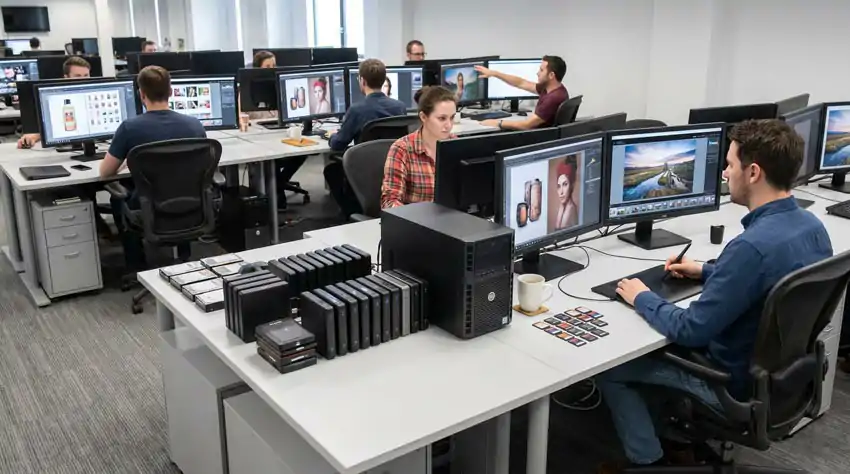
A single freelancer can usually manage 200 to 400 images a month. After that, quality or speed may drop. If you need more, you’ll hire another freelancer.
This means double the management work and the challenge of keeping quality consistent. Things can get complicated quickly.
With a company, you can scale your volume without extra management work. You send 800 images instead of 400, and your workflow remains the same.
This matters a lot for photographers with seasonal demand. A wedding photographer during peak summer, a real estate photographer in a hot market, or an e-commerce brand preparing for Black Friday all need surge capacity. A company has it built in.
Defined Turnaround Times
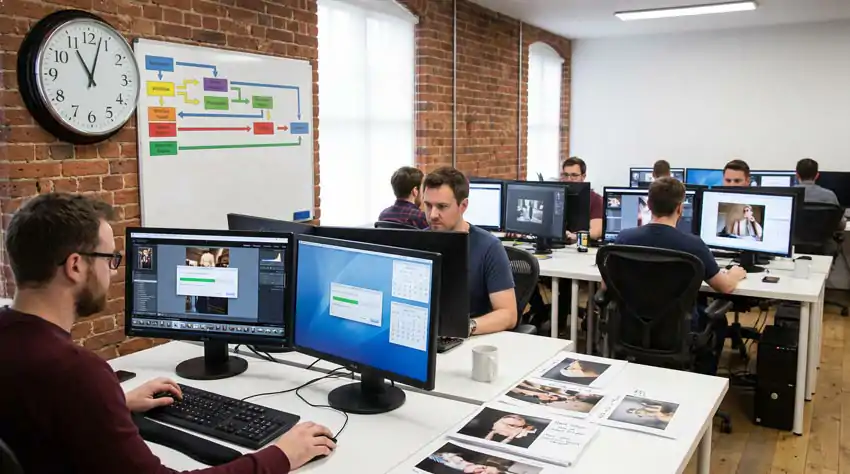
Most professional photo editing companies guarantee turnaround times. Standard jobs usually take 24 to 72 hours. Larger batches typically require 3 to 7 business days. This shows real commitment, not just a guess from someone with many clients.
For client-facing businesses, a reliable delivery schedule is worth paying extra for. You can build your entire workflow around it and actually keep the promises you make to clients.
Better for Ongoing, High-Stakes Projects
Companies have created systems for ongoing photo editing tasks. These include intake processes, revision protocols, dedicated account managers, and quality reviews before files are sent out. This way, you don’t depend on one person’s judgment, especially when they’re tired or distracted.
The Drawbacks of Working With a Photo Editing Company
Higher Cost Per Image
Companies charge more than most freelancers. If your volume is low, the cost difference is hard to justify. You’re essentially paying for infrastructure you don’t need yet.
Less Personal Interaction
The process with an editing company can feel transactional. You submit files through a portal, get them back edited, and repeat. You might not have a relationship with any specific editor.
For some photographers, that matters. They want someone who genuinely knows their work and cares about it.
Less Flexibility for Unusual Requests
Companies work best when your needs fit their standard service offerings. Highly custom editing styles, unusual file formats, or very niche requests can sometimes fall outside what their workflow handles. A freelancer is often more willing to accommodate something specific.
Key Factors to Help You Decide
Your Monthly Volume
This is the clearest deciding factor. Under 100 images a month, a freelancer is usually fine. Over 400 consistently, a company starts making real sense. The math shifts once you factor in management time and the cost of reliability problems at scale.
Your Delivery Commitments
If you’ve promised clients a specific turnaround, the freelancer’s single-point-of-failure issue is crucial. Your business reputation relies on meeting deadlines. Companies eliminate that risk completely. If you have flexibility and no strict deadlines, a freelancer poses less risk.
Budget Constraints
If you’re just starting out and cash is tight, a freelancer is the practical choice. Once you’re generating consistent revenue from your photography or e-commerce business, factor in the true cost of inconsistency. That includes client complaints, re-editing time, revisions, and your own hours managing a stressed or unreliable editor.
How Specific Your Style Is
Photographers with a very particular editing aesthetic sometimes find that a well-trained freelancer does a better job matching their look than a company where multiple editors touch the work. If your style is personal and complex, the freelancer model has a real advantage here.
Ongoing vs One-Time
One-time project? A freelancer is the easier, cheaper path. Ongoing work where you need consistent output month after month? A company is built for exactly that.
The Hybrid Approach That Actually Works
You don’t have to pick just one. A lot of photographers and e-commerce businesses use both.
They partner with a photo editing company for regular, high-volume batch work, product catalogs, and any tasks with tight deadlines. They hire a freelancer for creative projects, special tasks, or anything needing a specific style.
Many profitable photography studios run this hybrid model. The key is knowing which type of work goes where, and not trying to force a freelancer to handle volume they can’t sustain or asking a company to replicate a very personal artistic style.
The Bottom Line
Neither option is objectively better. They serve different needs at different stages of a business.
If you shoot 80 portraits a month, have a freelancer you trust, and your clients are happy, stick with what’s working. If you run an e-commerce store and handle many product images each week, deadlines can slip if your freelancer feels overwhelmed. So, it might be time to consider a company for help.
The worst thing you can do is treat this as a permanent, either/or decision. Your business will grow. Your needs will change. What works at 50 images a month stops working at 500.
Be honest about your current volume, your delivery commitments, and how much management time you actually have. The right answer becomes clear pretty fast.
If reliability and scale matter to you, go with a company. If you need personal attention and you’re not processing huge batches, a good freelancer will serve you well. And if you’re somewhere in the middle, the hybrid approach might be exactly what you need.