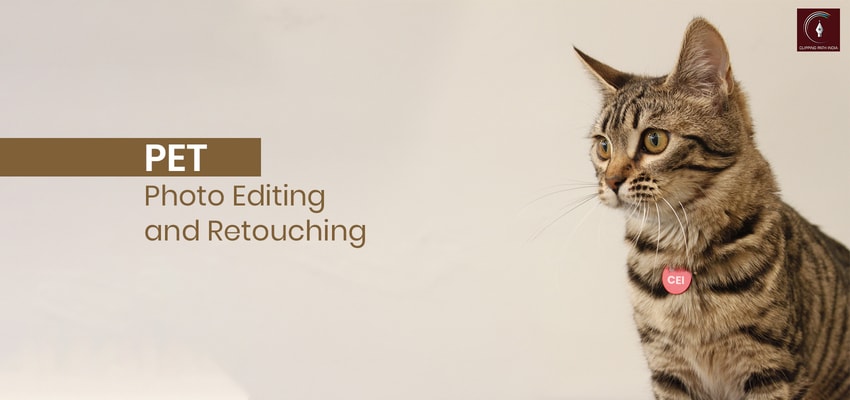
From Raw to Revenue: The Power of Professional Retouching
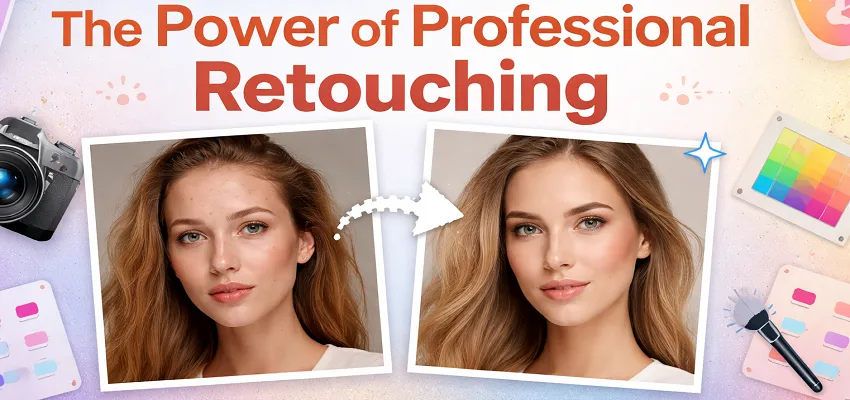
You invested in a professional photoshoot. You booked the studio, hired models, and arranged the lighting. And, you paid the photographer.
Then you uploaded the RAW files to your website. And sales barely moved.
Here’s the hard truth most brands don’t want to hear: RAW images capture products. Professional retouching captures revenue.
In today’s eCommerce-driven market, your product image is your sales rep. It works 24/7. It handles objections silently and builds trust instantly or destroys it.
And in competitive markets, “good enough” visuals don’t win.
Let’s break down how professional retouching transforms unpolished captures into measurable business growth.
Your Camera Captures. Retouching Converts.
Research shows that online shoppers depend on product images to make purchases. They look at visuals before reading your description or checking reviews.
And here’s what makes it more critical:
First impressions happen in under a second. Your customer doesn’t analyze your image consciously. They feel it.
If your product image looks flat, slightly dull, poorly lit, or inconsistent with your brand tone, the buyer doesn’t send feedback. They leave.
Professional retouching is not about vanity. It’s about removing friction in the buying process. When friction decreases, conversions increase.
What “Raw” Really Means And Why It’s Not Sales-Ready
Photographers love RAW files because they preserve maximum image data. That flexibility is powerful during editing.
But customers don’t see data. They see:
- Muted colors
- Low contrast
- Harsh shadows
- Minor product imperfections
- Distracting background elements
- Inconsistent white balance
RAW images are like unfinished architecture. The foundation is strong, but no one wants to live inside exposed concrete.
Here’s how RAW issues directly impact revenue:
|
RAW Issue |
Customer Perception |
Business Result |
| Dull colors | “This looks cheap.” | Lower conversion rate |
| Uneven lighting | “Something feels off.” | Reduced trust |
| Visible dust or flaws | “Is this used?” | Cart abandonment |
| Color mismatch | “Will it look like this?” | Higher returns |
Most businesses don’t lose sales because their product is bad. They lose sales because their presentation creates doubt. And doubt kills conversions.
The Psychology of Visual Buying
Humans are visual decision-makers.
The brain processes images faster than text, so your product image sells your product before anyone reads the copy. When a customer sees a clean and polished image:
- The product appears premium
- The brand feels trustworthy
- The purchase feels lower risk
When the image is inconsistent or poorly edited:
- The product appears lower quality
- The brand feels unprofessional
- The buyer hesitates
That hesitation often leads to comparison shopping or abandonment. Luxury brands are meticulous about every highlight, shadow, and tone.
They are not editing for aesthetics. They are editing for perception. And perception influences price tolerance.
That’s why premium brands can charge more for similar products.
What Professional Retouching Actually Includes
Professional retouching is structured and strategic. It goes far beyond adding filters or adjusting brightness. Here’s what it typically involves:
1. Color Correction and Calibration
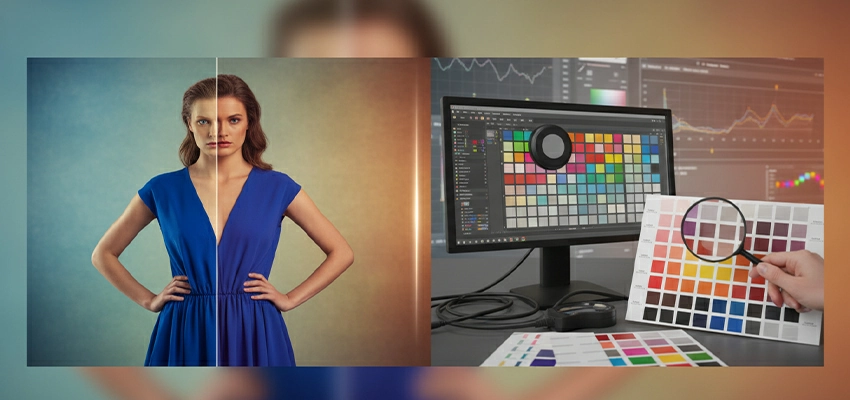
Accurate color reduces return rates. In fashion and cosmetics, color mismatch is one of the biggest reasons for returns.
Professional retouching ensures tones match reality while remaining visually appealing. This creates alignment between expectation and experience.
2. Background Removal and Clean Edges
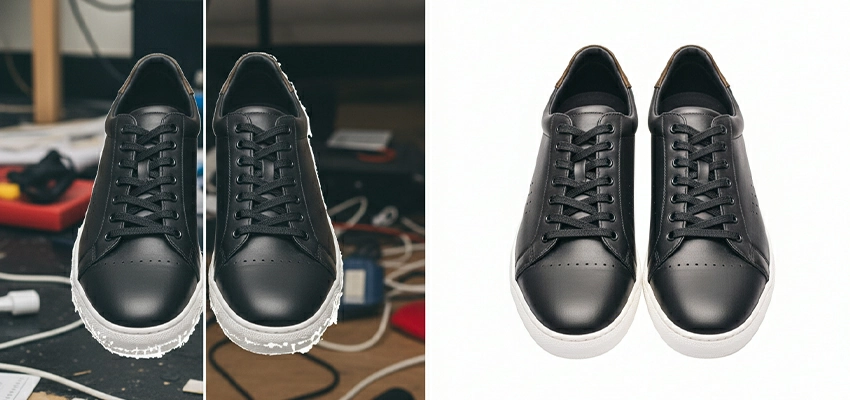
Marketplace platforms require strict image standards. Clean background removal is not just about isolating the product; it’s about precision.
Poor clipping results in jagged edges, unnatural outlines, and visual distractions. Clean edges increase focus. Focus increases conversion.
3. High-End Detail Retouching
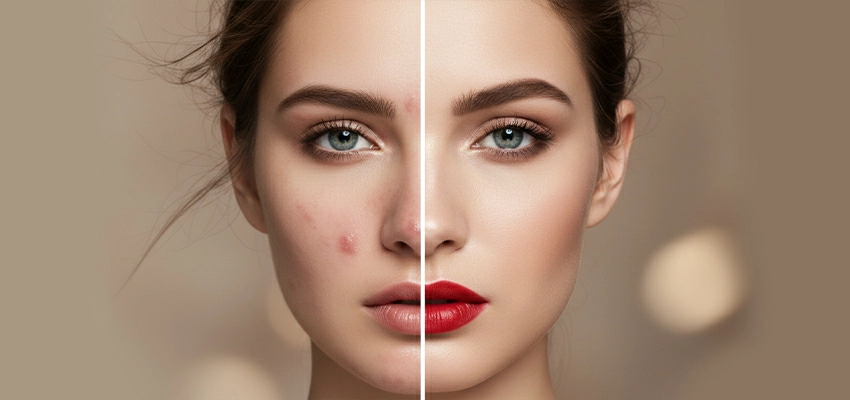
For premium products, especially beauty, fashion, and jewelry, detail matters. High-end retouching includes:
- Texture preservation
- Micro-imperfection cleanup
- Controlled skin refinement
- Reflection adjustment
Done correctly, the edit is invisible. Done poorly, it looks artificial. The goal is believable perfection.
4. Shadow and Depth Creation
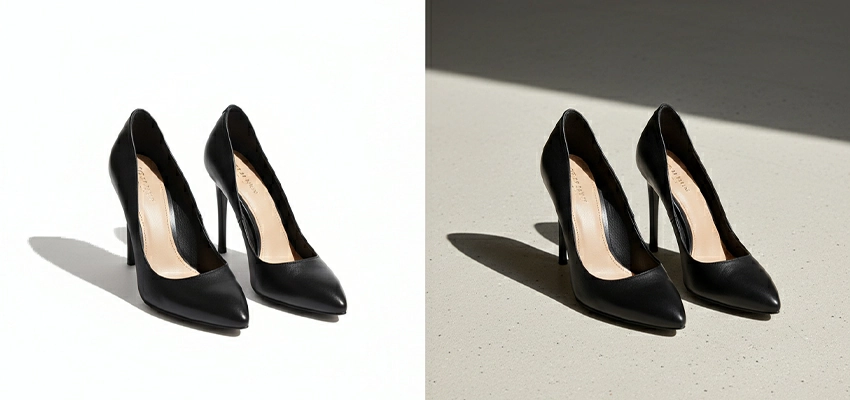
Flat images feel lifeless. Natural shadows add depth and realism.
Realistic depth makes the product feel tangible. And tangible products feel safer to purchase.
Mini Case Study #1: Fashion Brand Conversion Growth
A mid-sized apparel brand approached with a common problem. Their traffic was steady. Their pricing was competitive.
But conversion rates were stuck at 1.9%. Upon reviewing their catalog, the issue became clear:
- Slight color inconsistencies across SKUs
- Visible fabric wrinkles
- Uneven lighting between product sets
The product quality was strong. The visual consistency was not. After implementing:
- Catalog-wide color calibration
- Fabric smoothing without texture loss
- Standardized tonal adjustments
- Controlled shadow alignment
Results within 60 days:
- Conversion rate increased to 2.6%
- Return rate dropped by 12%
- Paid ad ROAS improved by 18%
No change in product. No change in price. Just a stronger visual presentation. That’s the difference professional retouching makes.
Retouching and Direct Revenue Impact
Let’s simplify the math. Assume:
- 100,000 monthly visitors
- 2% conversion rate
- $80 average order value
Monthly revenue = $160,000
If better visuals lift conversion to 3%:
Monthly revenue = $240,000
That’s an additional $80,000 per month. Did retouching cost $80,000?
No. That’s why retouching is not a cost center. It’s a performance multiplier.
Better Ad Performance
Your paid campaigns depend heavily on visuals. Improved image increase:
- Click-through rate
- Engagement
- Quality score
- Lower cost per click
Higher CTR lowers acquisition cost. Lower acquisition cost increases profitability.
Professional retouching doesn’t just impact your store. It impacts your marketing efficiency.
Mini Case Study #2: Jewelry Brand ROAS Increase
A jewelry brand was running Meta ads with average results. Their issue wasn’t targeting.
It was a presentation. Problems identified:
- Stones lacked sparkle
- Metal reflections were dull
- Lighting varied across product shots
After implementing:
- Micro-contrast enhancement
- Reflection refinement
- Controlled highlight balancing
- Catalog-wide consistency
Results in 45 days:
- CTR increased by 22%
- Cost per purchase dropped by 17%
- ROAS increased from 2.8x to 3.6x
Same audience. Same ad spend. Better visuals.
DIY Editing vs Professional Retouching
Yes, you can edit images in-house.
Yes, AI tools can automate basic tasks.
But here’s the trade-off. If you spend 15 minutes per image and have 1,000 SKUs, that’s 250 hours.
What is your time worth? And more importantly:
Can DIY editing deliver consistent luxury-level output at scale?
Probably not. AI tools are powerful for:
- Basic background removal
- Exposure balancing
- Batch corrections
But AI struggles with:
- Fabric realism
- Jewelry detail refinement
- Skin texture nuance
- Brand-specific finishing
The smartest brands use hybrid workflows. AI for speed. Humans for precision.
Scaling from 100 Images to 50,000
Small brands focus on image quality. Growing brands focus on image systems. At scale, you need:
- Editing guidelines
- Quality assurance checkpoints
- File naming standards
- Version control
- Reliable turnaround times
If your visuals delay your campaigns, you lose momentum. Professional retouching partners operate like production lines- consistent, fast, and predictable.
That predictability protects revenue.
Common Retouching Mistakes That Kill Revenue
Not all editing improves performance. Avoid:
- Over-smoothing skin
- Over-saturation
- Fake shadows
- Plastic textures
- Inconsistent white balance
The goal is not unrealistic perfection. It’s a believable refinement. Customers don’t want fantasy. They want confidence.
How to Choose the Right Retouching Partner
If you outsource, evaluate based on:
- Industry specialization
- Portfolio depth
- Scalability
- Turnaround reliability
- QA process
- Data security
Do not choose solely on price. Cheap editing often costs more in lost conversions.
Frequently Asked Questions
1. How much does professional retouching cost per image?
Costs range from $1 to $10 per image, depending on complexity.
2. Does retouching really improve conversion rates?
Yes. Even a 0.5–1% lift in conversion rate can significantly increase revenue at scale.
3. Can AI replace professional retouching completely?
Not yet. AI handles bulk tasks efficiently but lacks the precision required for luxury finishing and brand nuance.
4. Will retouching make my product look unrealistic?
Not when done properly. Professional retouching enhances realism rather than distorting it.
5. How long does it take to retouch large batches?
Turnaround time depends on volume and complexity. Professional studios can manage thousands of images each day using organized workflows.
6. Is retouching necessary for Amazon and marketplaces?
Yes. Strict image standards require clean backgrounds, accurate color, and professional presentation.
Raw Images Capture Products. Professional Retouching Captures Revenue
Here’s the bottom line. You can invest in traffic. You can also optimize SEO and scale paid ads.
But if your visuals don’t build trust instantly, you’re leaking revenue. Audit your top 20 products.
Compare them with competitors. Ask yourself: Do your images justify your price?
If the answer is no, your problem isn’t traffic. It’s a presentation.
Professional retouching doesn’t just polish photos. It transforms raw files into revenue engines.
And in competitive markets, that difference isn’t cosmetic. It’s strategic.