How Product Image Quality Affects Conversion Rates: What the Data Says

You can run great ads, price your product right, and write a copy that actually makes sense. And still lose the sale.
Why? Bad product images.
Online shoppers can’t hold your product. They can’t feel the fabric, check the weight, or see how big it actually is in real life.
All they have is what you show them. So when the photos are blurry, flat, or just not helpful, most people leave. And the ones who do buy? A lot of them come back with a return.
This article breaks down what the research actually shows, with real numbers, real case studies, and things you can act on today.
First, the Numbers
Let’s start with something simple. The 2025 Salsify Consumer Research Report found that 77% of shoppers say high-quality images and videos matter when they’re deciding what to buy. Not “nice to have.” Actually matters.
Now here’s where it gets interesting.
A 2024 e-commerce analytics study found that high-quality product photos had a 94% higher conversion rate compared to low-quality ones. That’s across electronics, apparel, home goods, and beauty.
Shopify’s research puts it at 33% higher on average for professionally shot products. Statista’s 2025 benchmark data shows professional photography converts 40% better than the same product shot with a regular camera on a plain background.
Pick whichever number you trust most. They all say the same thing: your photos are either making you money or costing you money. There’s no neutral.
People Look at Photos Before They Read Anything

Baymard Institute tracked what shoppers actually do when they land on a product page. Turns out, 56% go straight to the images, before they read the product name, the bullet points, anything. On mobile it’s 74%.
That’s not a small thing. It means your image is the first impression, the pitch, and often the deciding factor, all at once.
There’s a reason for this. A researcher named Ben Bushong found that products physically in front of people were valued up to 60% more than products people only read about. Photos don’t fully close that gap, but good ones get closer than most sellers realize.
JungleScout’s 2025 survey of 2,400+ Amazon sellers backs this up. High-quality primary images ranked as the single biggest factor in conversion for first-time buyers. Ahead of price, reviews, and shipping speed.
If that surprises you, think about how you shop online.
Returns Are Costing You More Than You Think
Bad images don’t just kill the sale. They also create a mess after the sale.
US online return rates hit 16.9% in 2024. That’s $890 billion in returned merchandise. And before you blame sizing charts or shipping damage, look at the actual reason people give. Salsify found 71% of consumers returned something because the product didn’t look like the photos.
That’s a photography problem.
Here’s a quick way to think about the money. Say your store does $1 million a year in revenue. A 5% drop in your return rate gets you $50,000 back. McKinsey’s data suggests that better imagery alone reduces returns by 23%, because customers know what they’re getting before it ships.
Most brands spend far more trying to improve reviews than they ever spend on photos. The ROI math usually doesn’t support that.
How Many Photos Do You Need?
More than you probably have.
A study of 240+ e-commerce sites found four to six high-quality images is the sweet spot for most products. Each image you add up to that range lifts conversion probability by around 5% to 8%. After six, the gains slow down for most categories.
For bigger purchases like furniture, complex electronics, or luxury goods, seven to nine images kept showing positive results.
60% of shoppers want to see at least three or four images before buying. 13% need five or more. Amazon gives you nine image slots. Most sellers fill fewer than five.
ASOS is a good example here. They upgraded to high-quality photos and added 360-degree views. Their conversion rate went from 1.33% to 2.48%, an 86% jump. Then in 2024, they pushed image count from six to twelve per product. Mobile conversion went up another 18% within three months.
This is one of the lowest-effort changes you can make, and it’s still being ignored by most sellers.
The Technical Stuff That Actually Affects Sales
Photography skill matters, but so does how you handle the files.
Resolution. If your image is under 1,000 pixels on the longest side, zoom doesn’t work properly. It either does nothing or produces a blurry mess. Shopify recommends 2,048 by 2,048 pixels as the minimum. Zoom alone, when it works well, can increase sales by up to 10%. One case study showed a 28% increase in image size led to a 63% jump in conversions.
Load speed. Google’s Core Web Vitals research links a page load time under 2.5 seconds to 24% higher conversion rates. Heavy image files slow your page down. Compress them without killing the quality, and serve them in modern formats like WebP where you can.
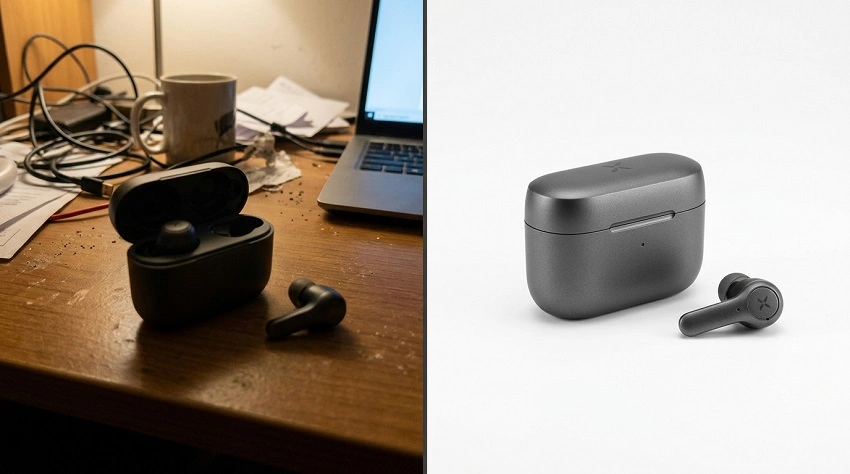
Background. Clean beats busy. Research found shoppers respond better to products on simple, darker backgrounds with the product centered and the background out of focus. A cluttered background pulls the eye away from the product. That’s the last thing you want.
What 360-Degree Images Actually Do
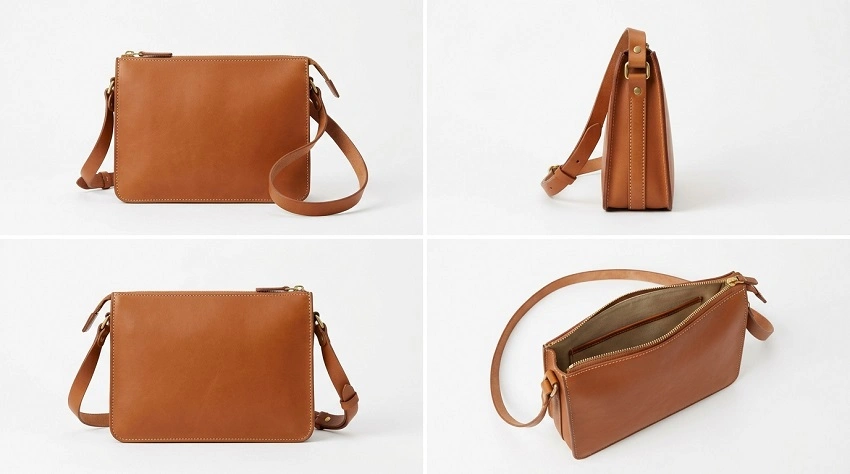
A regular photo shows one side of a product. That’s often not enough.
DueMaternity.com switched from standard front-and-back shots to 360-degree rotating images and saw a 27% lift in conversions. Golfsmith found products with 360-degree views converted 10% to 40% higher than products without. Amazon’s 360 View feature, across more than 2 million product listings, drives 50% longer time on page and 27% higher add-to-cart rates.
360-degree images also cut returns in half, according to some seller data. When someone can spin a product around and zoom into every angle before buying, they’re less likely to be surprised when it arrives.
Augmented reality takes it further. Apps like IKEA Place let you point your phone at a room and see a couch sitting there at actual size. That sounds like a gimmick until you see the data. Northwestern University’s Medill School found interactive imagery reduces return rates by 22% compared to regular photo galleries.
It Depends on What You’re Selling
Every category has its own version of this problem.
Clothing. Flat-lay product shots don’t cut it anymore. Shoppers want to see how something looks on a real person, from multiple angles, with detail on the fabric. ASOS data shows model-worn images with multiple views increase add-to-cart rates by up to 73% over flat-lay alone.
Skincare and beauty. Texture and color accuracy matter more than almost anything else. Sephora found listings with high-resolution texture close-ups got 58% more engagement. Show the product on a counter, next to other products, in actual use. That context lifted average order value by 12%.
Jewelry. People need to see the finish, the stone, the scale. How big is this ring on an actual hand? Professional macro shots or detailed AI-generated close-ups can push conversion up by 80% or more in this category, based on a 2024 Etsy seller benchmark.
Furniture and home goods. These need context more than almost any other category. A sofa floating on a white background tells a buyer very little. The same sofa in a real room, lit properly, with the right scale, tells a whole different story.
Most People Are Shopping on Their Phones
Mobile now makes up 62% to 73% of all e-commerce traffic. And most product pages aren’t built for it.
Adobe Analytics found 83% of mobile shoppers say image quality matters more than product descriptions when they’re on their phone. That makes sense. Nobody wants to read a wall of text on a 6-inch screen. A clear, well-shot photo does the job faster.
ASOS redesigned their mobile image galleries in late 2025 to use portrait-oriented photos that work better when you’re scrolling with your thumb. Mobile conversions went up 21%.
If your images look fine on a laptop but shrink awkwardly on a phone, you’re losing a lot of the people who are actually visiting your store.
Does Better Photography Pay For Itself?
Almost always, yes.
Traditional photography runs $200 to $500 per product SKU when you add up the photographer, stylist, and studio time. For a 500-product catalog, you’re looking at $100,000 to $250,000. That’s real money, and not every seller can spend it.
AI-assisted photography has changed the situation. Photoroom’s 2024 report tested AI-generated images against traditional studio shots in A/B tests across apparel, beauty, and home goods. AI came within 3% of traditional photography on conversion rates, at a fraction of the cost.
The same report surveyed 500+ e-commerce brands. 96% said their conversion rates went up after upgrading their imagery. It didn’t matter whether they used a studio or AI tools. Upgrading helped.
The question isn’t whether better photos pay for themselves. The question is how fast.
A Quick Audit You Can Do Right Now
Before you plan a reshoot or buy software, check these five things.
- Can shoppers zoom in clearly? Images need to be at least 1,000 pixels wide, ideally 2,048.
- Do you have four to six photos per product, including a lifestyle shot and a detailed close-up?
- Do your images look good on a phone, not just a desktop?
- Are your pages loading in under 2.5 seconds with images included?
- Do your photos show the actual color, texture, and size accurately?
If you said no to two or more, that’s your conversion leak. Fix the technical issues first, they’re usually the quickest wins. Then put your budget toward better photography on your top 20 products and track what happens over the next 30 days.
What This Comes Down To
Your product photos are doing a sales job every hour of every day. They either close people or lose them.
A 94% difference in conversion rate between good and bad images isn’t subtle. That’s roughly the difference between a store that works and one that doesn’t, all else being equal.
The sellers doing well on Amazon, Shopify, and everywhere else right now didn’t stumble into it. They took their product photography seriously and treated it like the revenue driver it actually is.
Better photos mean more sales. They also mean fewer returns, longer time on page, and stronger trust. It all compounds.
If your images aren’t doing that job, now you know where to start.