The Real Product Photography Gear Guide

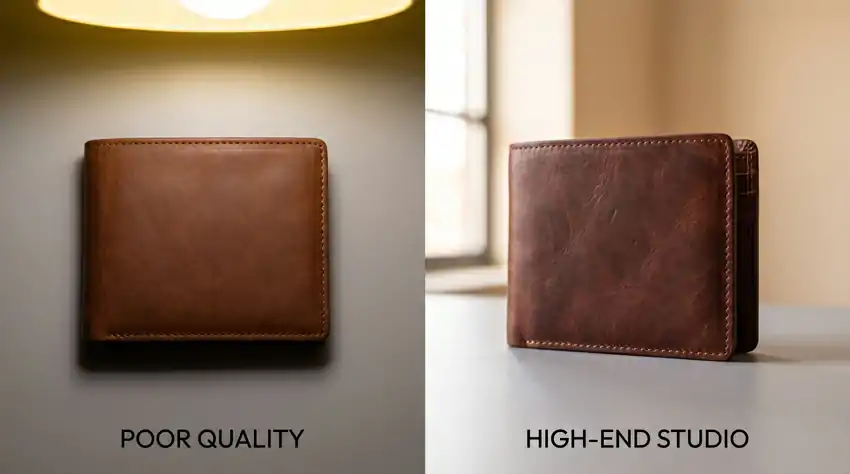
Product photography is important for all modern businesses, including online business sectors. In ecommerce sector, you cannot touch products directly before buying. The only thing, you can see the product photo and by this means, you have to choose your required product. Ecommerce business growth is much dependent on the use of high-end quality product photos which must present the details of the product. That’s why this product image should be taken at the studio properly keeping in mind ecommerce adaptability.
For shooting quality product photos, great photographers use a lot of gear. They never compromise with quality, so they do, what shooting high-quality photos requires. They use cheap and high-rated gadgets which are convenient for product photography.
Why Any of this Matters
Here’s the thing about selling online: nobody gets to touch your product before they buy it. They can’t feel the fabric, check the weight, or turn it over in their hands. All they get is a photo, and somehow that one flat image has to do the job their senses would normally do.
So yeah, the photo is kind of everything. It has to show texture, true color, real scale, and enough detail that a total stranger feels okay clicking “buy now.” Ask anyone who runs an online shop and they’ll tell you sales swing hard based on photo quality alone, sometimes more than the product description does.
We used to think this required a studio and thousands of dollars in gear. It doesn’t. A lot of photographers who shoot for ecommerce brands are running lean setups, a handful of tools they know how to use well, not a warehouse of equipment. What follows is a rundown of what’s actually worth owning, roughly in the order I’d buy it if starting from scratch.
Essential Product Photography Gears
For the photographers (even if you are a new photographer) anyway, we are going to describe in detail product photography gears. Reading this article, you will know much about various photography gadgets which would be beneficial during shooting.
Camera

Start with whatever you’ve got. We mean that literally. I’ve seen sellers put out clean, genuinely sellable product shots using a two-year-old phone, and I’ve seen people drop $2,000 on a camera body and still get muddy, flat photos because the lighting was wrong. Upgrade once you actually know what’s holding you back, not before.
DSLR and mirrorless
Buying new in 2026? Go mirrorless. Canon, Sony, and Nikon have mostly walked away from DSLRs at this point, and mirrorless bodies cost about the same now while giving you better autofocus and a live preview of your exposure, which honestly matters more for product work than people expect.
A few things worth checking before you buy anything:
- Does it shoot RAW? This one’s non-negotiable. RAW files hold way more detail than JPEGs, and that extra headroom is what lets you fix color and exposure properly later instead of just patching over problems.
- Can you control aperture, shutter speed, and white balance manually? Product shoots are repetitive by nature. You want the exact same settings on shot 40 as shot 1, not the camera guessing fresh every time.
- Are you going to swap out the kit lens? Because you should. The lens that comes bundled with most cameras is built for grabbing casual family photos, not crisp close-up detail.
When you need wide angle
Shooting furniture, appliances, anything big? A standard 24-28mm lens sometimes just can’t fit the whole thing in frame unless you’re backed into a wall. That’s where something wider, in the 14-20mm range, earns its spot in the bag.
Smartphones have genuinely caught up
This used to be a real compromise, and now it mostly isn’t. The camera systems in current phones, think iPhone 16 Pro, Galaxy S25 Ultra, Pixel 9 Pro, shoot RAW, let you control exposure manually through apps like Halide or Lightroom Mobile, and handle tricky lighting situations better than a lot of older DSLRs ever did.
If a phone’s what you’ve got, three things move the needle most:
- Shoot RAW (ProRAW on iPhone, RAW mode on most Android camera apps) so you have real room to edit later.
- Grab a clip-on macro or wide lens if you’re shooting something very small or very large.
- Keep it still. A cheap tripod with a phone mount fixes most of the “why does this look amateur” problem on its own.
Pair a decent phone with good lighting and honestly, at the sizes most ecommerce sites display photos, nobody’s going to tell the difference between that and a DSLR shot.
Lighting, where photos actually win or lose

If there’s one thing to take from this whole guide, it’s this: lighting matters more than the camera does. A great light setup shot on a mid-range camera will beat an expensive camera shooting under one bare overhead bulb, every single time. Not close.
Flash or continuous light
Flash units fire a short, powerful burst of light, which lets you shoot at small apertures like f/11 without needing a pitch-dark room or long exposure times. Most commercial studios run on flash.
Continuous LED lights have closed the gap a lot lately, and honestly they’re easier for beginners because what you see is what you get. No guessing how the flash will look once it fires. Panels like the Godox SL60W or the dimmable Neewer kits are affordable, color accurate, and plenty good for most ecommerce work.
My take? Start with continuous LED. Move to flash later if you need faster shooting speed or more raw power for tricky surfaces like glass or dark fabric that eat light.
Shaping the light
- Raw light straight off a bulb is harsh and throws hard, ugly shadows. A few tools fix that:
- Softboxes spread light through fabric so shadows soften instead of cutting sharp edges. You’ll see these in almost every setup.
- Diffuser panels do something similar for a single source, and the collapsible ones fold flat when you’re done.
- Reflectors, usually the collapsible 5-in-1 discs, bounce light back onto the shadow side of whatever you’re shooting so you don’t end up with one lit half and one dark half.
- Light tents are basically a tiny studio in a box: a cube with translucent walls that wraps the product in even light from every direction. Great for small to mid-size items and stupidly easy to use right out of the box.
- Light stands hold it all up and let you angle lights wherever you want. Cheap aluminum stands from Neewer or Fovitec work fine. Save the studio-grade stands for when you’re hauling heavier modifiers around.
Lens

Good lenses are so much important to serve your purposes. Photography mostly depends on the use of a proper lenses in every situation. Commercial shutterbugs understand well the features of the lenses. While buying lenses, you have to concentrate on a feature of focal length that determines how close images you want to shoot, and f-stop that how wide the aperture you can open. So, for a professional photographer, you have to choose the best photographic lenses. You should have more than one lens available with you so that in different situations you can use suitable and appropriate lenses for shooting better photos.
There are some other lenses that you must like and make your photography profession fun & easier. Such as-
35mm
35MM lens can be your best photography partner. It can be used for versatile tasks. What will make you a lover of this lens are its focal length, video-making features, suitable for best capture and any environment, low light performance and interaction, wide angle constraint, size, weight, compact types, and most importantly versatile usages? You can use this lens for any shoot such as landscapes, portraits, travel shots, macro photography, real estate photography, ecommerce product photography, and many more. Its amazing zooming capacity enables you to shoot extraordinary images.
50mm
This lens is best for capturing stories. It can perform well overhead and flat lays position. It can also shoot great images in low light due to its large aperture. Its budget is affordable and you must be elated to have such a stylish lens.
60mm
It is great for macro shots. It is also capable of flat lays and overhead. It has cropped sensors and it is also close to 50mm with macro capabilities. Such a lens is very convenient for product photography.
85-90mm Tilt-shift
It is another fantastic lens that is great for tight crops, 45-degree angle, mix blur, clear focus, subject position, and great control. The lens also can be one of the most important parts of your photography profession.
90-105mm
This lens is perfect for macro photography and it is featured with tight crops, macro shots, 45-degree angles, full frames, and many more. You can have this lens for shooting any product photo.
Reverse Lens Ring
It may be one of the most useful tools for photography. If you have a lens that let you zoom product image, you can use the same lens by reversing it to shoot macro photographs just using the reverse lens ring. This ring will enable you to attach the front part of the lens to the body of the camera and vice-versa. Thus, you can shoot macro and big-size zoomed images using the same lens that you have.
Accessories

Globally recognized photographers use a lot of accessories to bring out the best output from their profession. Various types of photographers such as product photographers, nature photographers, etc. use different accessories which will add extra quality to your image. Let’s head over the things that you need to be a professional shutterbug.
Focusing on Rail or Slider
A focusing rail slider is a great part of close-up or macro photography. It also plays a significant role in focus stacking. While shooting photos of tiny products or insects, you require to move camera up and down or left and right for focus stacking properly. If you go to move the camera manually by hand, it may get shaken effects that would harm the pro quality. Besides, properly focusing on every part of a tiny thing is impossible with a camera in hand. To fix this problem, in such cases, it is the best way to use a focusing rail or slider.
Automated Turntable
It is also an important gear that can add extra features to your photography profession. This kind of table helps to create a 3D or 360°packshot of product image. It moves automatically and will rotate the product 360° which will help you to shoot product images from every angle. You need not move your camera around the product rather, the automated turntable will rotate the product and you can shoot every part.
Tripod
If you want to capture professional images, you have to buy a suitable tripod for photography. In different situations and environments, you have to shoot and in these cases, if you use your camera by hand, images may get shaky effects. A shaky image is not suitable for use anywhere for commercial purposes. You also cannot use these images personally. So, you need to have at least one tripod with you to shoot outstanding photos.
Glass table
Shadow provides a realistic view of the product images. For having a realistic reflection shadow of the ecommerce product images, you need a glass table. It will reflect your product on its surface and while shooting, you will have a natural reflection shadow.
Mirror
Many product photographers use mirrors during capturing photos to have realistic product shadows. It helps to have a nice reflection shadow. Often translucent shadow is created using glass. For many other special shadow effects, you can use a mirror.
White Backdrop
If you use a light box, you don’t need to use any white background, but if you set your entire room as studio, you must have a white background. In serving this purpose, you can use a white wall, whiteboard, paper, cork sheet, etc. Any product image gets focused in detail with a white backdrop.
Green Screen
During product photography, many photographers use a green background screen. Such a background provides the advantage of extracting the main object from your image for background editing. It also enables you to add effects and awesome white or another background.
Wired remote shutter release
It is a useful thing and will add fun to your photography profession. If you are a little lazy photographer, this wire remote shutter will provide ease to shoot photographs. Using this tool you can press the shutter from a remote place.
Umbrella
Umbrella is also a necessary thing for throwing light on the image. An umbrella is attached to the stand and there usually remains more than one port so that you can use more bulbs for more light. Various types of umbrellas are used in a product photography studio and you can buy from the market according to your requirement.
Shooting table
You may require shooting table to keep stand your product. It helps to make closer your product to the camera lens and keeps in focal range.
Clip, Tape, Hanger
To keep your product straight during photo shooting, you may need clips, tape, hunger, etc. It will keep the product shape unchanged. In case of garment items photo shooting, these things are very crucial.
Bounce cards
Bounce cards are especially for lighting properly. These things are kept standing beside the product so that they are highlighted in the details. As bounce cards, you can use a white cock sheet by folding and standing just opposite sides of the light so that light can bounce back to the product.
Convenient room
For creating a suitable product photography studio, you should have a nice and decorated room. If it is white in color, it would be a good place. It should have a big window for enough natural light and air. This room will be well equipped and clean which will offer you a suitable working environment. A convenient photography room is necessary for huge production.
Mannequin
Mannequin is one of the most important and used things that you need to shoot photos of cloth items. During shooting photos of garment items, there is a possibility to get scratched and folding on the dress. Besides, to have a 3D or hollow effect, the shutterbugs use various types of mannequins depending on the variety of dresses. You can also have these mannequins in the market.
Enhancer Liquids
In Jewelry Photography, most photographers use glossy enamel paint over Jewelry to make them look clean & shiny. And in Food Photography, use of Okra (ladies finger) juice, jute leaves juice, and egg white is popular. These liquids make the food look yummy and glossy.
Post Production Service

It is a fact that whatever costlier or dynamic photography gadgets you use, your product photos need photography post-production services to be engaging and glamorous. What images you see on the internet are more or less retouched. Some of them may receive background removal services, object removal services, color correction, Photoshop shadow effects, and many more. Anyway, if you like to retouch DIY at studio, then you should have a computer and some image editing tools. Let’s see what you need.
Computer
For product photo editing purposes, you have to have a personal computer of good configuration so that you can use all the necessary tools and software. It should be of high configuration because there is so much photo editing software that needs updated platforms to be installed. Besides, if it is a low-quality computer, it would work slowly. So, you have to buy a suitable one.
4K or Upgraded Monitors
Monitor is an important thing for high-quality post-production service. Low resolution or non-branded backdated monitors should not be used for photographic editing services. Such a low-quality monitor cannot show the proper result of image retouching, color correction, glamour retouching, product photo enhancement, etc. due to its low resolution. So, for doing photography post-production works, you have to use a 4k or upgraded, modern, and branded computer monitor to ensure the best result of product image editing.
Adobe Photoshop
Adobe Photoshop is the most recognized photo editing tool among global graphic editors. You can do any kind of photo editing works with this kit. Here are lots of tools and options that are applied to retouch any image, simple or complex. There is no image that you cannot edit using Photoshop. You can do any kind of change in Photoshop. You can do clipping path, background removal, image masking, ghost mannequin effect, color correction, image restoration, Photoshop shadow effect, and many more. For professional image editing services, there is no alternative to Photoshop. So, you need it.
Adobe Lightroom
Adobe Lightroom has dedicated software for light and image exposure correction. You will also get spot removing tool also, but the most important thing is that you can utilize this tool for refining and culling images. It will provide you an advantage to choose the best image from hundreds of images. Lightroom will make this hard task easier.
Pen tablet
It is a wonderful tool for providing high-end quality retouching service. The images have soft edges like model hair images, furry animals or cloth, blankets, and many more. It also helps to skin retouching. This tool actually works as an alternative to the mouse. You cannot use the mouse properly in case of photo soft edge retouching whereas the Pen tablet will give you more advantages.
However, the above-mentioned tools and gears are the most used gears for professional product photography. The photographers do not have any scope to compromise with quality, because the success of their work totally depends on the production of ecommerce quality product photos. So, they use all the updated gears required for their photography.
Photo Editing Console

Many professional product photographers work with many fancy tools, and Photo Editing Console is one of them. For some brand in the market, you can look into Loupedeck, Quick Board 360 by TuneShark, PFixer by Pusher Labs, and Palette Gear. Once you get your hands on these gears, you can feel like a Disc Jockey, if not, a controller in Star Trek Spaceship.
Other Software & Tools

There are many other software that is capable of further product image enhancement. Some of them are automated and some of them work manually. Let’s have a look at some product photo post product tools.
Blending & Stitching Software
For photo post-production services, you can use many other tools instead of Photoshop. These tools also perform well for stitching and creating panoramic images. For stitching product images, you have to be careful during capturing images. You have to capture images in the same exposure and perspective. Anyway, we are including here a list of image stitching tools and software.
- Kolor Autopano
- PanoramaPlus X4
- Hugin
- Image Composite Editor
- ArcSoft Panorama Maker
- Panoweaver 9
- Autostitch
- PTGui
- PhotoStitcher
These tools are very cool and fun to use. Your experience will be enough good and these tools produce satisfactory results.
Mobile Apps
If you shoot product images using mobile, you can do post-production editing works on your mobile using some dedicated apps. If it is simple photo editing, you don’t need a PC, rather you can do it by the apps which produce almost the same results like the professional photo editing tools. Here, we are going to include a list of photo editing mobile apps.
- Amazon Seller
- Stitch Pics
- Bimostitch Panorama Stitcher
- Pic Stitch-Collage Editor
- Auto Stitch Pic
Product photography at home (short list)

If you want to create a product photography studio at home, you can. In that case, you have to keep in mind certain things that accelerate your success. You should have a complete studio setting suitable and capable of shooting high-quality product photos. Here we’re going to provide you with a list of things you need for DIY photo shooting.
- Plan and think about budget
- Select the right room full of natural lights.
- Arrange the right product photography equipment.
- Perfect your product photography lighting setup.
- Follow various types of Photography techniques.
- Edit your photos after production.
- Or take photo editing services from other companies.
The bare minimum, if you’re starting from zero
A camera or a recent smartphone that shoots RAW. A light tent or a simple two-light softbox setup, and you can even build a light tent at home out of a cardboard box and white tissue paper if you’re tight on cash. One or two table lamps or LED panels. A plain white backdrop, foam board, poster board, even a bedsheet works.
A sheet of glass and a white card for reflection shots. A cheap turntable, a lazy Susan honestly works in a pinch. A tripod, even a basic one. Lightroom, mobile or desktop, for quick edits. And the Amazon Seller app or whatever your platform’s own app is, if you’re listing there directly.
Put together on a tight budget, that whole list runs somewhere between $150 and $400 depending on what you already own. It’s enough to shoot photos that look genuinely professional, as long as you’re careful with the lighting and composition. The gear matters less than people assume. What matters more is paying attention to light and detail, every single time.